Thursday, December 31, 2015

The Happy One


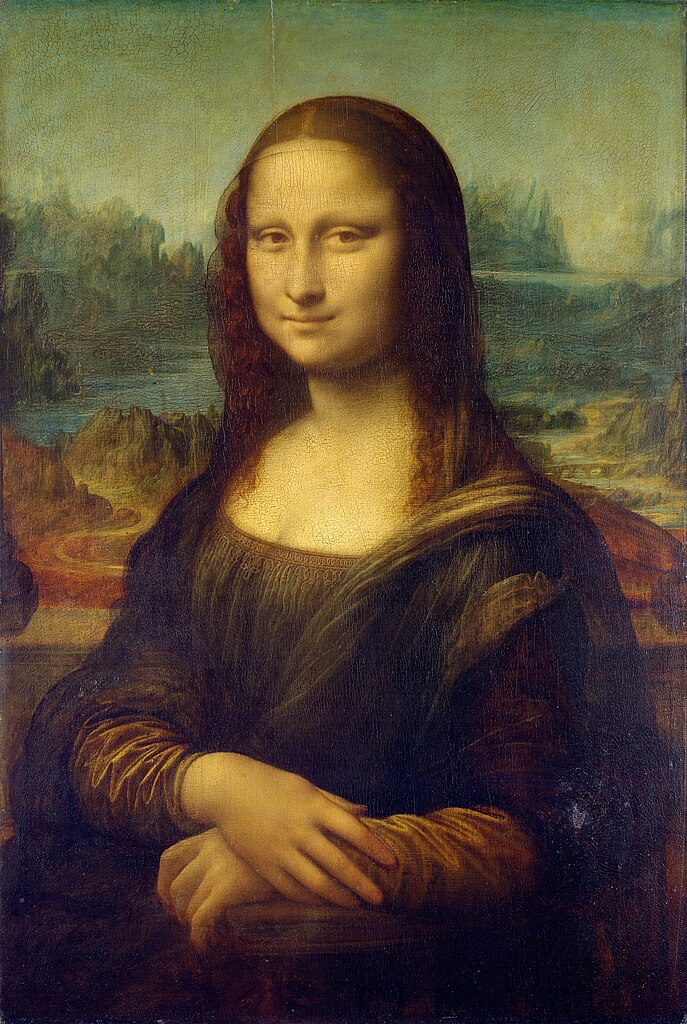
I had not smiled in a quite awhile. And I did not plan to smile that day - in those moments - but he made me feel beautiful. Not because he loved me in a romantic way, but in the way that a friend may love you. That is, after all, the best kind of love. It is far less likely that such a relationship will break your heart, your spirit, and I know this one will not.

He was so kind and tender with his words that I could feel my soul healing with every brush stroke, every etched line and crevice he so masterfully crafted. So I showed him no sign of a broken heart - of my broken heart. It’s wonderful what such an exchange of the human spirit can do to a soul - and none more than the exchange of an artist and his muse. And I am the muse. The muse portrayed with the happiness due to me!! And I will always love him for it. Though he did not complete the work for me, he triumphed in the completion of my upset, my sadness. 

I lost my little girl four years ago. I did not know what would become of me without her - without her here with me - and the hole in my heart grew to to a depth too grossly immense, too vividly substantial, that it’s dissolution and eradication seemed so far out of my reach. Too far out of my grasp. I healed rather minimally through my sweet and blessed children, my husband, and my glorious friends - who never failed to uplift my spirits, but there was always a piece missing. One I could not fulfill.

Sadness is a poison. It seeps through the veins of the disheartened so mercilessly, so unsympathetically, that it will turn the most benevolent and kindhearted souls into spirits of coldness and indestructible stone. I remember feeling such sadness that I could not feel my toes - and I could not get out of my sweet bed - because I could not feel my heart. My heart was missing. It was so hurt by me - by my loss - that it could not live happily in my own body. My heart was hurt. Plain and simple. My heart hurt.

But how he fulfilled my heart for me! What is a woman if she is not the leading lady of her own life? Of her own destiny? And this is what he asked me and inquired of me. And I know that a woman’s worth is of great value, and she should not be sorrowful if she has so much to live for and look forward to! How I love him for breathing such life into me and how I love him for showing me a way - and I will forever be known as the happy one because of him. I promise that I will return this to him with a smile - one that I will have forever. I could never repay him -- no amount of money, no amount of diamonds or gold  can compensate him for what he did for me. For the energy he gave to me. And whenever I think of him, I am given life again! I can think so clearly and I can actually do what I never thought possible - because he healed me with a simple brush stroke. With his art. He risked his station in life for me - he risked his career to heal me - and I will never forget it. I am forever indebted to him, for turning the light in my soul on again. And I will pay him back with my happiness,

I will pay him back with a smile.


Monday, December 28, 2015

My Reasons to Despair And Hope In the Name of Climate Change

Reason for despair:  Denial of climate change, inaction revolving around its indisputable reality, and reduced education in the fight for climate change mitigation are a few reasons to despair over such a global, environmental epidemic. Those who refuse to acknowledge that humans are majorly, or at least partially, responsible for the rise in the global temperature, the increase of greenhouse gases in the atmosphere, and the reduction of glacial ice, for example, pose more of a hazard to Earth than any other entity on the planet. We are seeing global warming at an unprecedented level, and it will  continue to worsen with any communal, definitively blind refutation revolving around its grave existence or any other assertion maintaining that humans bear no responsibility over Earth’s welfare and its increasingly fragile condition. I numbingly despair over those who deny climate change and its effects on our dear planet.


Reasons to hope: With the COP21 and other efforts to educate the world, encourage political action, and seek global solidarity in the fight to reduce climate change, I have hope that we will achieve a stable, environmental temperature, necessitate the creation of the tools and technology required to further aid in the mitigation of global warming, and foster an international consensus on the realities and threats of climate change. China, for example, is becoming a leader in the realm of climate change mitigation, and the country’s promise to reduce coal emissions is a huge step forward in this global effort. Their initiative is truly inspiring, simultaneously encouraging the rest of the world to follow suit -- promoting solidarity, support, and, most importantly, education.

Saturday, December 19, 2015

Intro


Once upon a time there lived a princess. She lived in a world filled with gold, diamonds, and silver. Her favorite color was pink and her favorite food was cake. All kinds of cake. But she was still the size of a peanut. Her favorite day was Christmas and her favorite season was summer. How she loved summer time. The warmth of the golden air and the light of the sun’s strength beaming against her translucent skin. It was romantic and dazzling enough to be written about in any story, novella, or poem. Yes, summer was her favorite season, and during the cold winter months it was all she could think and dream about. 

Saturday, December 12, 2015

Hm..


What should I write about today? I have this century’s worst case of writer’s block, and it won’t seem to shake. What do you write about on days when you cannot think of anything at all to pen on a sheet of paper, of an idea to artistically convey via the medium of language and literature?? Maybe I should just write about my writer’s block, then, ey? Well, it’s not very interesting. A short story, perhaps? Of what? I’m thinking of a young girl - and why a young girl, you ask? Young girls don’t have much of a voice in the world and I could provide such a voice to a girl who needs and deserves one, despite how miniature my own twitter and blogging platform is. Hm..

Monday, November 30, 2015

Brief "By the Sea" Review


Relationships are fascinating. Love is fascinating. The heartbreak and grief that often stem from these relationships and turbulent throws of love are fascinating, and so, too, are the internal mechanisms through which we cope with these feelings of loss and emotional discontent. Sadness is fascinating, selfish despair is fascinating, and witnessing characters overcome, or at least attempt to overcome, any form of melancholia is fascinating. Yes, sorrow is one of the most intriguing facets of the human experience, and the range of such self-despondency is virtually boundless. This sweeping, cognitive horizon and grand field of unsettled emotion is delicately explored in countless pieces of art, music, and literature, as well as in Angelina Jolie Pitt’s latest directorial and acting endeavor, “By the Sea.”

“By the Sea” is a story of love, loss, and, of course, heartbreak revolving around the marginally redeemable yet sweetly corroded marriage of Vanessa (Jolie Pitt) and Roland (Brad Pitt). These characters are introduced to us in a lovely opening sequence driving through gorgeous weather on the sea-side in a flashy little convertible, really setting the picture’s aesthetic tone of ‘70s glamor with the perfect mixture of rustic naturalism and urbanite chic. If it sounds too good to be true, it’s because it is. It’s almost too pretty, but its beauty sucks the viewer in and adds several dimensions to the greater, overarching story. Yes, the scope of beauty in this picture is not remotely similar to the amount of beauty found in real life, especially in toxic, overwrought relationships, but it is this magnitude of incredible visuals and dreamy shots that counterbalance the inner-ugliness of these characters, and an ugliness that we come to discover during their stay in a hotel that is, of course, by the sea.

When viewing this picture as an intense character study and dynamic relationship piece, Angelina Jolie Pitt has struck gold. When viewing it as a narrative or plot production, we’re just happy that we have all of the pretty pictures to look at. In either case, there is still so much to be enjoyed about the feature. The craft and execution of the immaculate scenery is quite extraordinary, as well as the inner dimensions of these broken characters and their relationships with fellow hotel dwellers (who also happen to be newlyweds) Lea (Melanie Laurent) and Francois (Melvil Poupaud). Poupaud does great work here, but this is definitely a standout performance for Laurent, who portrays Lea with a delightful yet sexy enthusiasm, with a brilliant charisma and delightful sensuality to top it off. At any rate, their interactions with Vanessa and Roland are complex character machinations, and ones that Ms. Jolie Pitt should applaud herself for. The weaved synergy between all four of these personalities exposes the multi-faceted, layered nature of these characters so smoothly, it’s as though Jolie Pitt concocted a gourmet character dinner for the viewers to indulgently feast their cinematic proclivities on. This really helps show, more than anything, the various sides to Roland and Vanessa. We see them at the best of their relationship, and the worst of their relationship within several, heart-wrenching moments because of the simple presence of the newlyweds next door, who remind them of a love that they don’t share. Though Vanessa and Roland definitely love one another, and care very much for each other’s being, it is not the same kind of passionate love that is so deeply shared between Lea and Francois. 


Yes, “By the Sea” is a remarkable character piece, and one that reveals the human experience of grief, loss, and severe upset through a fearless intensity that draws the audience in by the fascinating character interactions. Though the picture may be viewed as a vanity piece, there is so much that connects it to the global human experience of grief and loss. Jolie Pitt definitely cements herself as the real deal in this feature, and I honestly can’t wait to see what she does next with other, more complex personalities.

Wednesday, November 25, 2015

HIV: What Exactly Is It?

And to make this treatment accessible on a global scale. Just because something is available does not mean it is accessible.
Human Immunodeficiency Virus is a retrovirus that attacks the body’s population of CD4 cells, or T cells. These cells are essential in fighting off disease and infections, and HIV kills off the population of these cells to make copies of itself. Though there is no known or accepted cure to HIV right now, the disease can be treated with ant-retroviral therapy.  This type of medication is required daily to allow those afflicted with HIV to live normal, happy lives. If left untreated, HIV can develop into Acquired Immunodeficiency Syndrome, or AIDS. AIDS is the final and last stage of the HIV disease, and not everybody reaches this stage of infection when provided the appropriate treatment. When the population of CD4 cells falls below a count of 200 cells per cubic millimeter in the human body, or when diagnosed with one or more opportunistic infections, HIV has reached the level of AIDS. 

There are sometimes no symptoms to HIV, so it’s important that those who are sexually active get tested frequently. Sometimes, within 2 to 4 weeks of exposure to the disease, people will experience the “worst flu ever” including symptoms of fever, swollen lymph nodes, sore throat, rash, fatigue, muscle pain, and severe headaches. Again, if left untreated, the infection will progress to AIDS and the symptoms will worsen to ones of rapid weight loss, recurring fever, extreme fatigue, diarrhea, bodily sores, pneumonia, purplish lesions all over the body, memory loss, and even depression. These symptoms are largely due to the opportunistic infections that occur alongside AIDS.

Currently, there are approximately 1.2 million people residing in the U.S. living with HIV and approximately 35 million people living with the infection globally. Apparently, 19 million out of the 35 million infected are unaware that they have HIV - a large statistic considering that the number is more than half of the HIV population. According to WHO, sub-Saharan Africa is the most largely affected, with approximately 24.7 million people infected with the virus, which is about 71% of the entire global HIV population.


To see change, we must cultivate a global awareness of HIV/AIDS, the ins and outs of its treatment, and the necessity for global accessibility to treatment. It is unacceptable for HIV to progress to AIDS with the availability of such anti-retroviral therapies and medicines that can stabilize a healthier T cell count in the body. We need to make use of this availability and create accessibility out of it as well.

Tuesday, November 17, 2015

My Favorite 4 Female Characters in Martin Scorsese's Movies

Much of Martin Scorsese’s work revolves around the male psyche and male characters.  Many often critique this singular focus, overlooking the female perspectives, feminine subtext, and context of his films. Though Scorsese has a clear penchant for depicting male centralized pictures, his features would be nothing without his conscientious inclusion of the feminine paradigms, characters, and personas in his work. Yes, there is a predominantly male focus in the majority of his movies, but there is also a balanced female counterpoint in these pieces that remain integral and pertinent to the final, conclusive product. To say that Scorsese is ‘sexist’ or ‘misogynistic’ is absurd - to describe some of his male characters with the latter adjectives is perfectly fine. He is merely depicting and portraying worlds that he knows and, since people love to talk about what they know, or - in this case - creatively film what they know, it is fitting that someone with such a unique and rare comprehension of the world deliver that knowledge in his work. It’s as though he creates pictures that he, himself, would want to see, while incorporating characters that fascinate him rather than ones that seamlessly identify with his own personality and gender views. And with every intriguing male character he includes in his movies comes a female counterpart equally as essential to the meaning and overarching thematic undertones present in the respective work. Conversely, with every central female character comes a male or categorical group of men to counterbalance the prevailing essence of femininity exuding the particular feature. No matter the primary perspective, whether male or female, Scorsese maintains the gender integrity of his work by consistently incorporating varying psychological dimensions of men and women and their opposing voices. When the main character is a man coming to terms with his disputing inner voices and external conflicts, there is always a woman to help define this world and reality more evenly and precisely. Similarly, when the main character is a woman coping with daily obstacles and the friction between herself and her world, there is always a male voice or masculine perspective to balance the specific picture’s humanity. Yes, the majority of Scorsese’s art explores masculine identity, but this is more a result of his own artistic awareness of the male experience, not a disregard, disrespect, or dislike of the female experience as suggested through his provision of exceptional roles for women in his range of work. There are so many great female characters in the movies of Martin Scorsese, and characters that should not be overlooked simply because of arguments insinuating unconscious, artistic tones of sexism and misogyny. Do not mistake a misogynistic male character for a misogynistic male director. So, with that said, here are some of my favorite female roles as depicted by Scorsese...

Ellen Burstyn as Alice Hyatt in Alice Doesn’t Live Here Anymore (1974)


Alice Doesn’t Live Here Anymore (1974) is probably one of Martin Scorsese’s most feminist pieces, revolving around the psychology of a woman who just lost her husband, seeking internal/redemptive freedom while taking care of her young son and dealing with the losses and triumphs of unpredictable romance. Themes of female survivorship, motherhood, and gender equality dominate the feature, and the delicious little depiction of female resilience, perseverance, and strength resonates with the audience long after its viewing. Burstyn rightly won the Best Actress Oscar for her remarkable work here, and I’m curious to see if Scorsese and this leading lady will collaborate on anything again in the future.

Juliette Lewis as Danielle Bowden in Cape Fear (1991)


In this remake of 1962’s Cape Fear, Juliette Lewis portrays a young girl tackling the hardships of high school and the pubescent obstacles facing girls of that age and generation. The realism with which Lewis portrays Danielle Bowden is as striking as it is captivating, especially as a new-18-year-old actress. One of the most poignant scenes in the movie, in which Robert De Niro’s Max Cady manipulatively seduces Ms. Bowden, remains one of the most chillingly creepy and disturbing ten minutes in horror history, with Cady’s death sequence coming a close second. Lewis’ gorgeous narration and clear ability to hold her own in the various dramatic, horror, and action scenes of Cape Fear allows this role a canonical place in Scorsese’s list of iconic characters, regardless of gender.

Cathy Moriarty as Vickie La Motta in Raging Bull (1980)


The intrinsic nature of Vickie LaMotta in Raging Bull is complicated, unnerving, and definitively human. In lesser hands, this role would have come across as purely supportive to Robert De Niro’s Jake LaMotta, but Moriarty makes it her own with an intelligent and quick-humored performance, balancing perfectly with her male lead counterpart. She is able to cultivate a particular level of audience empathy to a somewhat detestable character, even after her various, underhanded choice of actions - like sleeping with her husband’s brother - could alienate some viewers. Yes, Vickie lives in a man’s world, and is just as bad as all of the men portrayed in Raging Bull, including Jake LaMotta himself. The ugliness of Vickie, however, is balanced with the sweetness she exudes during Jake’s courtship of her and the ultimate sequence depicting the building of their lives together. There are several sides to Vickie, and this multifaceted role is what makes this character one to remember.

Diahnne Abbott as Rita Keane in The King of Comedy (1982)


Though this is a fairly small role, Diahnne Abbott completely rocked it as Rita Keane in The King of Comedy. All of the cringeworthy and hard-to-watch-moments as provided by Robert De Niro’s Rupert Pupkin become easier to stomach with the normalcy and ordinariness of Rita Keane. She is calm, collected, and cool, offering a breath of fresh air against the outrageousness of Pupkin’s consistently unbearable persona. When Pupkin breaks into his idol’s home, Abbott is able to balance his palpable desperation with a necessary naivete and fundamental, subtle awareness. This allows the utter sadness of Pupkin’s character, who we come to pity at various points in the feature - and especially when he trespasses into the house of his hopeful mentor - to remain slightly more bearable to watch. Her sense of sanity and self is a much needed slice of normalcy in a feature that so fearlessly encapsulates idiocy, desperation, and, well, the darkness of comedy.