Sunday, December 15, 2013

Couples: What Keeps Em Interesting??

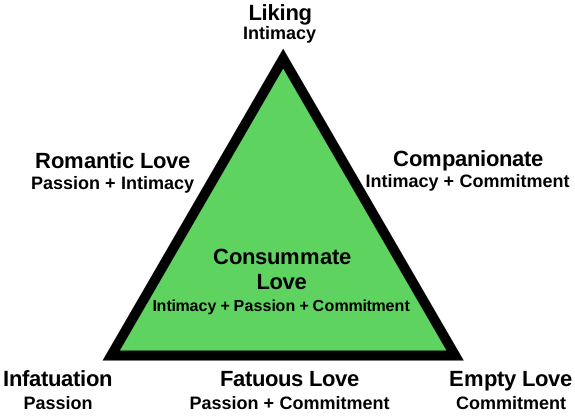
The Triangular Theory of Love by Robert Sternberg

I just read an article about passionate love (Please click to read here!!) and I thought the piece was really interesting. (I've secretly been addicted to articles/books/other literature revolving around relationship issues since college..) But I liked/agreed with many of the points in this article, but I don't really agree with the writer's notion that a lack of passion in older relationships, meaning empty nesters, those who've been with each other for decades,etc., is nothing to "bemoan," or worry about. (there are 3 components to the theory of love: passion, commitment, and companionship.) Of course the high of love may diminish over time, but that's just because companionship naturally takes over- but I think that's where commitment should also come into play, because the couple should be devoted to keeping it healthy, wonderful, and, of course, passionate. We're supposed to workout everyday, brush our teeth, and take showers - why can't we put the same effort into a marriage, just by doing simple things to ensure that passion, companionship, and commitment never fade as much as it potentially could?

In my view of it, commitment isn't just about remaining faithful to a lifelong partner(even though that is a key, integral aspect of it.. I know there are people out there who support open marriages, I'm definitely not one of them **though I'm not judging those who think it's okay**. To me, as I said, part of commitment definitely means that there's no one else in the picture besides your significant other.) However, I also think commitment, as stated in the article, is being committed to 'maintaining the relationship.' If this is so, even though the author of the piece makes excellent points on the subject, in my view of passionate love and the maintenance of it, commitment is key, because it means that the couple are committed to maintaining passion and companionship, not just faithfulness and honesty. A couple, I believe, should make the effort to keep a share of all three in a relationship every single day - though they may not keep them in equal shares day by day, all three components are still present in the relationship all the time.

It breaks my heart, especially with couples who've been together for so long, to see the passion fade. And I don't know if it's because the media or younger generations have deemed the physical and emotional desire between an 'older' couple a little taboo to talk about, but I definitely think passion could only grow stronger throughout the years. Say it's diminished in it's first two years of you being together, it's just because at a beginning point in a relationship you don't really have to work at it - but, once you notice it 'fading,' think how strong the passion could be between a couple once it's really worked at. Once there is a mutual commitment to protecting and preserving that initial desire, I think a couple could be unstoppable. So, basically, I really believe, even though I said commitment is a huge part of maintaining passion - that passion is the first and foremost need to take care of in any romantic relationship, coming above companionship and commitment (even though these qualities must always be there in an awesome, monogamous, passionate relationship). 

So, what do you think?? What components of a relationship do you think keep at alive?? I would love to know, because, after all, I'm not a PhD in this field, this is just my humble opinion, and the thoughts of others could be really eye opening!

Sunday, December 8, 2013

Self-Actualization: What Do I Value as a Filmgoer Most?


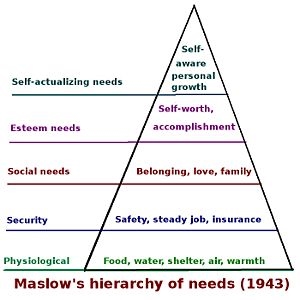
More than many people I know, I believe that I have a true respect for the art of entertainment. This may be more because my family is heavily involved in the arts, and I was introduced to the arts at a very early age, but I look at the field of entertainment just as Neil Armstrong viewed aeronautical engineering. Or even how Florence Nightingale viewed medicine, and even how my most wonderful Grandpa Peter views architecture (among his many interests, because I actually think he holds a love and respect for each field I just mentioned...). Nevertheless, when I view films, attend a play, or even go to a concert, the production’s ability to cultivate an awareness that this particular piece of entertainment is just as essential to me as a roof over my head, the clothes on my back, or the food I eat is what I need as a filmgoer. Specifically, I need the film to give me an experience of self-actualization. 
According to Abraham Maslow, in order for human beings to reach their potential, feel safe, and find happiness, they must have their physiological needs met, a sense of safety, love, esteem, and, finally, must experience self-actualization. I believe that movies, films, literature, and any other piece of art that furthers my process of self-actualization are those I value and remember most. So, to answer the question of what I value as a filmgoer, or what I value most about entertainment, is the ability to propel my innate need of self-actualization. The beauty about true, quality entertainment is that it does all the dirty work for you - all you have to do is watch a movie, rather than really experience something grand, life-changing, or even traumatizing, and it will get you on the right track to becoming...self-actualized, if that makes any sense. 

Sunday, December 1, 2013

"46" by Eloise Banting

My 46-year-old friend. Wild.


My friends dazzle in the rain,
Their souls so beautiful-bright!
Our hearts one and the same -
And our spirits so full of light!

But none of them radiate,
The glow of my best friend,
I met him when I was 3,
In my dream he did transcend!

A guardian angel so wise,
A guardian angel so free,
A handsome man of silver hair -
A protector just for me!

I know I shouldn’t have asked,
But he said he was 46,
He said his daughter is like me -
Up his sleeve there were no tricks!

He says when he visits,
It’s when I need him most - 
Though his soul is of the future,
He said that he’s no ghost!

His earthly spirit is not conscious,
Of his ability to come back -
He can only visit in my dreams,
During a metaphysical-mind-attack!

When I was 7 he told me,
After years of little dream-chats,
That we would meet one day,
And he’s the guy with all the cats!

Of this dream I do not lie,
Of this dream I remember well!
Of this dream I never thought much,
But now it’s a cool story to tell...

Then when I was awkward and geeky,
Around the sweet little age of nine,
He showed me a vision of a woman,
In a little black dress sipping white wine!

She also wore gold earrings,
Sporting nails and lips so red,
He said her heels stole his feelings,
But her eyes took his heart instead. 

In this dream he made me feel,
Like an outcast not a pearl.
In that moment I felt awful,
Because I could never be that girl!

I told him to go away,
And that we’ll never speak again,
He grinned and said he’s used to that,
So he came back when I was ten!

He was still 46,
And me already a decade,
He said we’d meet in a few years,
And that I shouldn’t be afraid.

I was so confused and crazed,
Then it was the night before high school,
He said that it’s tomorrow, 
And that I’ll feel like a fool.

Because I searched and searched,
Then  he came back again one night.
 I so badly wanted to meet him in person -
He said we had and I wasn't right!

I had enough of his little riddles,
And thought him a figment of my mind -
(But I write this because he came back yesterday!)
I now see I was so blind!!

He would not tell me what the future rears,
And that he already told me plenty.
He said the 'he' here's known me almost ten years,
While I've known him for almost twenty!


Saturday, November 30, 2013

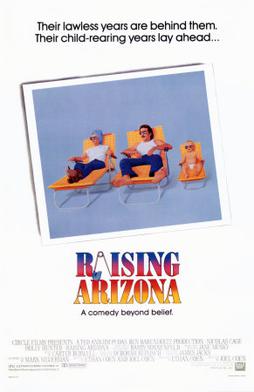
"Raising Arizona" (1987)


Aside from the fact that Nicolas Cage really irritates me, and we have fairly different philosophies on what makes a great actor (as I can tell in his performance in this particular film...), I really respect the way the Coens honed their gift of creating comedic crime pieces. Admittedly, it was a little difficult for me to sympathize with a former inmate who stole a beautiful precious baby from a good family, but what saves this scenario is Holly Hunter’s portrayal of Edwina McDunnough, or, more casually, Ed. Call it the mommy instinct in me, but I really felt the devastation in her inability to conceive. How awful would that be for any woman to go through, especially with someone you love? 
Aside from my little side notes, I definitely felt as though this was a more cleaned-up version of “Crimewave.” In “Raising Arizona,” they give us comedy and a crime without the overblown antics in “Crimewave.” Okay, their antics were a tad over-blown in this feature, but, for some reason, it works better. I think it’s because they weren’t relying on the tool of caricaturism as much, and give us laughable characters who offer more empathy, rather than acceptable, entertaining indifference. Though the notion of kidnapping someone else’s child truly sickens me, I know that the Coens were not endorsing this crime. They were, in fact, endorsing the notion that people who commit these crimes are worthy of being laughed at, yet, in some crazy little way, they still provide these characters with a slither of justice (as they should). (For example: when Hi and Ed save the little baby from that crazy Mr. Smalls. - and when they’re still forgiven for kidnapping Nathan Jr. from Nathan Sr. at the end..)
My thoughts: (and I hate to use the shoulda, woulda, coulda scenarios in these little film briefs, but.....) I think that framing the film from Ed’s perspective, Gale Snoats’ and Evelle Snoats’ perspectives would have provided this film with a little more meaning - I thought they were equally as funny and equally as empathetic. And maybe I’m just biased because I think Nicolas Cage is weird, but I think his performance was more supportive than leading.

Saturday, November 23, 2013

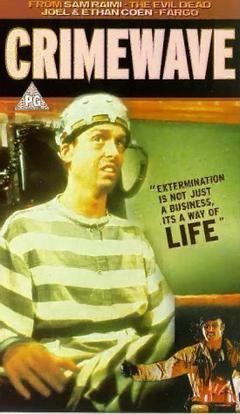
"Crimewave" (1985)


Next on my little list of Coen Brothers movies is 1985’s Crimewave for which they wrote the script with Sam Raimi, who directed the piece. Though the Coens didn’t have as much control over this project, their influence in its construction is palpable and one can definitely feel their ability to maneuver - as I like to say it - “kitchen-sink” crimes. Each scene is almost like a mini-movie, with a beginning, a middle, and an end - all pertinent to the overarching power of the film. There is such a wealth of delectable images, crystal-clear characters, plot mechanisms, and layered crime scenarios, that it is almost too much to bear at times, but they manage to pull it off because every aspect of the film is completely caricaturized. It seems like this was the perfect follow up after Blood Simple, in which the Coens told us they can make a great crime, drama, thriller all in one, but, in Crimewave, they tell us that they can cook up a dish with all the latter ingredients alongside a course of film noir/black comedy. 
As Blood Simple ends with an “unsolved” mystery to the eyes of any crime detective, Crimewave begins with an “unsolved” mystery to the eyes of any crime detective. Or, in this case, the eyes of penitentiary executioners, because the first shot of the movie opens with Victor Ajax, played by Reed Birney, sitting in an electric chair for  allegedly murdering people that were, in fact, killed by psychotic exterminators. I don’t wanna give away the ending, but I can assure you that, if anything, this piece showed an unexpected range from the Coen Brothers when it was released. With only two major movies under their belt at the point, audiences saw that the duo could make an intricate crime story comedic, or heart-wrenchingly visceral. It didn’t do too well at the box office, but it was a great experience for both the Coen Brothers and Raimi - I mean, I don’t really know if it was a “great” experience, but one can hypothesize as such because I’ve noticed several elements of Crimewave in all of their later work. So, even if making the film was not a “great experience,” it is certain that its creation remains heavily significant in regard to subsequent Coen Brothers’ and Raimi films.
I’ll leave you with one final note about the movie: The decision to create, in a sense, a caricature of a crime is what makes this film, giving Raimi and the Coens license to make anything as ridiculous as they wanna make it. It can be a little overbearing at times, but I only think it’s because the Coens didn’t direct it.

Friday, November 22, 2013

"Blood Simple" (1984)


Talk about a forensic psychologist’s dream. “Blood Simple” brings you inside the mind of everyone involved in a crime, and not just any crime, but a crime story on crack. With such a delicious combination, and the piece being the first feature concocted by the Coen Brothers, it was easy to see that they would have a glorious career ahead. I won’t give too much away, but I’ll just give you the premise on which the film was built. Basically, it’s about a Texan bar owner Julian Marty, played by Dan Hedaya, who hires sociopath private eye Loren Visser (one of the most brilliant characters in film, if I say so myself...), played by M. Emmet Walsh, to finish off his unfaithful wife Abby, played by Frances McDormand, and her boyfriend Ray, portrayed by John Getz. 
What really blows me away about this film is .. just .... everything. They truly weaved such a colorful, at times morbid (okay let's be real - it was pretty morbid every single second...), tapestry to perfection, with each thread being essential to the ultimate look of the piece. From the moment it starts to the moment it ends, the music, the images, the acting, the smells, the anxiety, the direction are working alongside each other magically. I would love to delve into specific scenes more, and it’s tearing me apart that I’m choosing not to, but the ending leaves Abby at the center of an unsolved mystery to the eyes of any detective or forensic crime analyst. And the Coen Brothers give the audience the tools to solve this multi-layered mystery....The composition of which almost reminds me of the mechanics one would discover under a kitchen sink - with such incredibly confusing, twisted pipes, one would never think that each of them are necessary for some simple water. Yes, “Blood Simple” is a kitchen sink with the most perplexing maze - water looks simple and we don’t think about how it is transferred to us. I would love to see the Coen Brothers make an educational video for plumbers or sink mechanics...possible entitling it “Water Simple” - what do ya think?? :) 

Tuesday, November 19, 2013

The Real Leads Behind the Camera: Why Is Film Their Purest Air?

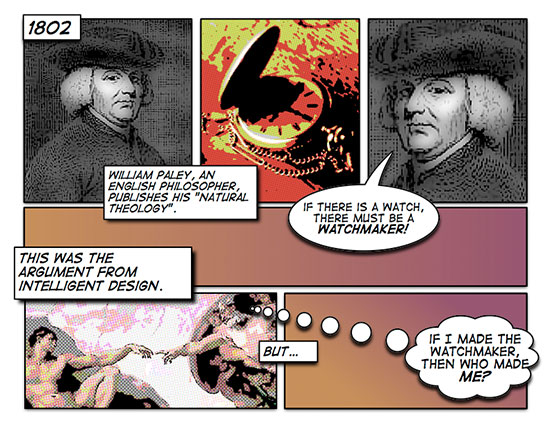
It was the only pictorial I found that defined the
"Watchmaker" philosophy best.

Part I.

Yesterday I viewed The Hollywood Reporter roundtable discussion with Barry Ackroyd, Sean Bobbit, Bruno Delbonnel, Stuart Dryburgh, and Phedon Papamichael, and began an examination of their cinematic duties which I intended to finish today. The piece was entitled “The Cinematographer: A Lead Behind the Camera?”, and I was aiming to provide the definition of cinematography, because shamefully I never really knew what they were. It’s almost like that feeling when you see actors in several films, but you don’t really know their names, you just know that they’re part of a cinematic production... Well, in addition to being introduced to the definition of cinematography, I was also taught how cinematographers are, in some ways, leads in a film, because they’re necessary to any quality production, just as much, if not more so, than a lead actor. I also believe now that actors or actresses must not only obey and respect the director, but also the cinematographer, because they are the ones who truly bend over backwards and sideways and everywhere to execute the director’s vision. But due to various technical issues caused by a naughty little hacker, that particular post and my notes got lost, and they were nowhere to be found .... So I chose to suck it up, and re-watch the conversation and re-write the post - and it’s completely different, not one idea is the same as yesterday’s. 
But the universe works in wonderfully magical ways sometimes, because my initial viewing of the video provided me the definition and duty of a cinematographer, but I could sense that I was brought back to the roundtable today because my cinematic guardian angel, if I have such a guide, needed me, not only to understand the cinematographer, but possibly the cinematographer’s experience. My little angel hadn’t finished with my lesson, and I was obliged to uncover why my initial piece, and notes, were so abruptly dissolved, forcing me to take a closer look at each of these cinematographic dynamites! I identified my true lesson only hours ago after realizing that, yesterday, I was told what a cinematographer is and their specific responsibilities, whereas today, I am told, not only of the duties of the cinematographer, but of a tragedy that has befallen quality filmmaking, and the eyes of real film may eventually be blinded because of it: a cinematographer’s remarkable talent in a production may become so abrasively stifled, simply because current entertainment is now depreciating the art of film with the reliance on digital, artificial intelligence.
I will introduce this brief investigation with the definition of a cinematographer, because, sadly, many of us are unaware of their crucial role in a film, myself included until yesterday. I’ll start by filling you in on my mental idea of a movie set, I’ve never been on a real one, and I’m sure this isn’t physically the case all the time or ever really, but it gives me a true, analogical, fairly philosophical, idea of how I envision quality filmmaking. So, just bear with me for a second, and imagine the director is looking over a great landscape...
And in the smallest valley of that landscape, standing in front of him is the cinematographer who controls the camera. You see, there has to be room for the producers, costuming people, lighting people, and everything in between who cannot go past the cinematographer when his cinematic eyes are open (or when the camera’s filming...), and they cannot step in between the director and the cinematographer when they’re working, but the cinematographer is responsible for managing all those in between. Sounds simple, right?? In a nutshell, in my crazy little mind I imagine, when filming, the director is behind the cinematographer, and other members of the production are also behind the cinematographer, but they don’t step in between the director and cinematographer, or in the cinematographer’s view when filming, but the cinematographer must manage all these crew members standing behind him to execute a picture the director’s happy with. Let me take a breath...  (Obviously in real life, I’m sure the director and cinematographer are standing like..right next to each other, but I hope you see what I’m saying). The director is in control, as he or she should be, it is their project, and the cinematographer crafts the eyes of the director’s project, and, ultimately, the way an audience member may view the final a piece of art.  
Alright, so now you have my rough definition of a cinematographer: they hold the camera on set, and they are responsible for creating an artistic image on film that represents the specific vision of a director. I’ll try and make the rest of this pretty short, but I think it’s necessary that you know what a cinematographer is.....

All right now for part II. 

The last Hollywood Reporter roundtable I viewed with directors gave me further insight on my definition of a good artist and a great one, whereas this roundtable session couldn’t have been more mind-blowing for me - just because, as shameful as it is, we rarely hear the voice of the cinematographer. Cinematographers Barry Ackroyd, Sean Bobbit, Bruno Delbonnel, Stuart Dryburgh, and Phedon Papamichael provided me, after watching their roundtable discussion, with such a greater understanding of “the pen” with which a movie is created, as said so sweetly by Dryburgh, and that technology has very much to do with the execution of such a remarkable creative process, which, intuitively, I’ve always kind of been aware of. I’ve always known that I’ve loved film over digital (but I’ve always thought that digital is a potential tool for a cinematographer, if they wish to use it. Just to create images that are as authentic as possible in the context of the director’s vision. I mean, I remember when I was 11 viewing Max Reinhardt’s A Midsummer Night’s Dream (1935) and seeing the strings attached to the ‘flying’ fairies. Of course, any cinematographer would use a digital tool to remove the strings to allow the audience to feel as though the fairies were really flying....But that’s what digital is: a tool, not a camera). Also, Dryburgh’s affirmation that he knows people in the academic world who I guess really believe that digital camera filming is the next big thing, and that theaters will be able to crank out so many different movies all the time really disgusted me. It’s almost as if the use of the digital camera in mainstream entertainment will turn movies into ‘fast food’ .. which is a reality, and I hate to get so sappy, that could completely break my heart. I remember seeing my Nana Hazel when I was probably just a toddler in ‘Stepping Toes’ and thinking she was the most beautiful, wonderful person in the world - and being so mesmerized by the fact that this was a pure portrait of my grandmother at one time...I couldn’t believe it! Imagine if I viewed those incredible scenes through a digital camera - her beautiful smile, her happiest happy demeanor, and her love to entertain would have been so dampened .... And I can’t imagine having those happy moments with her any other way.
I’m sure we can all agree that there may be great digital movies ahead, but anyone who claims that a digital lens is better than an organic, personalized one clearly hasn’t familiarized his or herself with previous, cinematic masters of film. And that’s why I also believe education is such an important aspect in cultivating a culture that knows what a quality movie is and what a quality movie isn’t. In my experience, and I’ve taken many courses revolving around the arts, people who have had a similar educational experience in artistic subjects tend to agree that, to put it bluntly, film is better than digital....
I don’t mean to be so upsetting, so I’m gonna share with you some of my favorite aspects of what each cinematographer said. I couldn’t choose a favorite, just because I really think that they all brought greatness to the discussion in their own cool ways. I completely completely completely loved Bruno Delbonnel’s example that cinematography is like watchmaking, which I believe may have been a reference to William Paley’s watchmaker philosophy (as pictured)....But it really helped me understand that there !really!!! is a true design and craft behind this type of work, and one that is found through film, not digital. His insinuations that himself and the other cinematographers at the table have very different styles, yet they’re still able to perform at such a brilliant level, in a way that is rewarding for themselves, and especially for a director, really resonated me. He basically says to Ackroyd that, since they don’t have the same brain, they could never do what the other does, which goes for all of the cinematographers around the table. It really got me thinking about how different their respective films this year would come out had, for example, Delbonnel been the cinematographer for “12 Years a Slave” or even if Papamichael been the cinematographer for “Captain Phillips.” They were each perfect for the parts they had this year and no one would have it any other way, but they certainly all have differing approaches to the art of cinematography - that are all exciting to watch.
In addition, Barry Ackroyd’s insight that the world works in two ways, a chemical and a physical way, and that a digital camera could not the capture the authentic combination of the two was pretty powerful. Especially as he was reiterating that he loves the creative process, which, even though I don’t have his experience by any means, I just know how rewarding it is and fulfilling it is when you create something that is just so, personally fulfilling through such a real method. Specifically, whether something great is created through a pen on paper(in my case - or  even a keyboard to a blank Word document), or a film camera on an image, it is the most rewarding, amazing feeling in the world.
I also have to admit that Sean Bobbit’s permanent little smile is an image that I’ll remember forever from the discussion. It never faded, even as he was stating his deepest insights on the world of cinematography. He really has an intuitive way of knowing where he stands with the director and creating work that a specific director wants, whether that director likes images or actors more - it seems like Bobbit can assess a way he creates pictures based on the director’s view of actors and images. I thought that was pretty cool....
Okay now we have Papamichael and Dryburgh.. To me, one can definitely tell that Papamichael is a cinematographer (after she knows what cinematographers are that is...), just because he is so, extremely observant. I almost felt as though he was looking at the people and the set around him thinking about how he would use a film camera to capture their moments together...You can tell he’s the type of dude who can say a lot with his eyes and, as I’ve discovered, is a great quality to have as a cinematographer.
I wanted to end with Dryburgh because his belief in movie magic is just as strong as mine. He refers to film’s ability to let him create “happy accidents” and he says that “the moment of creation is what I get a charge from.” I thought these statements were really sweet and beautiful, yet ring true for anyone who loves quality cinematic pieces - because these moments, let’s face it, cannot be found through digitalism (if that’s even a word..). Happy accidents are the heart of any creative process, and whenever you hear someone talking about ‘movie magic’ it is because of these wonderful discoveries. It really is magic. If you can’t find it, then ....I really just don’t know what to say(really, I don’t). Because magic is what I love most about movies, and anyone who doesn’t see that magic was likely never taught it or even really aware of it...
I know this post was in such strong support of film over digital - but I can’t help it. They were simply the first types of movies I was exposed to as a child, and the ones I remember loving. These cinematographers weren’t just making these arguments to save a job, they were stating such strong opinions against digital movies because they intend to save the craft of film - and those who love the arts, really really love the arts, will put it before themselves (whether or not they’ll get paid for it). This isn’t to say I haven’t fallen in love with certain digital films .. “Slumdog Millionaire” is of my favorite movies, but the fact is that a reliance on digital ‘film’ leads to a mass production of colorless movies - a ‘fast food’ of ‘film,’ if you will.  This may be a silly example, but I’d  so much rather see a handful of great, masterful movies a year than a number of lackluster ones.  So, basically, I’m just an advocate for quality over quantity.